The World of Logo Design

Have you ever thought about designing a logo? Before going into the details of choosing a logo design for a company, which, besides, will be used for a commercial website or corporate blog, it is important to mention that there is no right or wrong logo design. Graphic designers today use modern technology to create designs which are unique and it also connects psychologically. Being one of the best animation colleges in Bangalore, we try and provide every aspect of learning to the students.

A logo is one of the strongest symbols of a company, brand or product. It is the logo which stands out from 50 similar products in the market. A logo helps people recognize a brand and make decisions faster to purchase. The psychology of logos — from the fonts, colors, and shapes — affect how the UI/UX designers design them. 

Besides, a logo is one of the most important assets when it comes to a brand and should not only communicate the environment of a brand, but also be easily recognizable to the customers. The most important thing to remember when designing a logo is that the logo or symbol you create for a company must support the company’s brand and purpose. 

Just think of the big brands: McDonalds, Audi, Facebook, Nike, Twitter; They all have logos that talk about their businesses and become synonymous with the brand. But how important are logos for a company? In this article, we will discuss and present the various aspects that must be taken into account when designing a logo and how to make a logo, part of the brand recognition unit.

What is the design of logos?

Designing a logo is much more than choosing an image and a typographic font. The professional logo design consists of transmitting the values ​​and corporate identity of a business through the image in the process of creating your brand.

A logo represents the first visual contact that a potential customer will have with a business. What does this mean? That as for everything in this world, there is no second chance to make a good first impression. If your logo transmits your values, represents your business and aligns with the services / products you offer, we can talk about a brand with a designed personality focused and oriented towards its customers.

If the world’s leading brands changed their logo, would it affect us? If it’s minimal changes, probably not. However, right now nobody imagines a Coca Cola logo with square and uppercase letters or Nike without its symbol.

‘‘We associate images with concepts, concepts with ideas and, consequently, ideas with brands.’’.

What is a logo and what types are there?

Logo definition

Logo is a unique graphic symbol of a company, brand or product; as well as a group of letters, abbreviations, figures, etc adopted by an organization to identify its products. 

If we analyze the definitions, we can draw two significant conclusions:

  • A logo is a custom symbol for a specific purpose.
  • Logos are made up of a series of elements, that is, they are sets of shapes.

Types of logos

We can differentiate several types of graphic representations to identify a brand:

  • Monogram Logo (Lettermarks) : A monogram logo is a decorative design made up of a combination of one to three letters (traditionally three) to create a single symbol. Monogram logos or lettermarks consist of letters, brand initials. IBM, CNN, HP, HBO, Noticing a pattern, yes? They’re the initialisms of a few famous corporations with instead prolonged names. With 2 or 3 words to remember, they’ve each come to the usage of their initials for logo-identification purposes.
  • Wordmark or (logotype): Wordmark is used to refer to a specific design for the written name of an organisation, company or product, intended to aid recognition and provide what is often described as a graphic identity. Similar to a lettermark, a wordmark or logotype is a font-based logo that focuses on a business’ name alone.
  • Pictorial marks (or logo symbols): A pictorial mark is an icon or graphic-based logo. It’s probably the image that comes to mind when you think ‘logo’. A true brand mark is only an image. Because of this, it can be a tricky logo type for new companies, or those without strong brand recognition, to use.
  • Abstract logo marks: An abstract mark is a specific type of pictorial logo. Instead of being a recognizable image—like an apple or a bird—it’s an abstract geometric form that represents your business. However, instead of being restricted to a picture of something recognizable, abstract logos allow you to create something truly unique to represent your brand.
  • The emblem: An emblem logo consists of font inside a symbol or an icon.  These logos tend to have a traditional appearance about them that can make a striking impact, thus they are often the go-to choice for many schools, organizations or government agencies.
  • Combination: These logos combine a wordmark and a symbol or icon to give the flexibility for the use of either or both elements across a variety of applications.

The importance of logo design

Logo design is an integral part of the brand because it helps create an identity or recognition for a business or product by increasing brand visibility. A good logo design is important as it symbolizes not only how customers perceive a company, but also how they feel about it. A logo should send positive vibes about a company, a product and the philosophy of a business.

A company logo and corporate design should also look good and keep their proportions, whether you use them in print media or on your website, on social media or if you use them on a black or colored background.

What main aspects should be taken into account to create a logo?

In the creation of logos it is important to take into account a series of factors that will make an image stand out and have the success one expects. Some of these factors are as follows:

  • A logo must be easily readable. If we choose to use letters, we must pay attention to the chosen font, that the style is correct and that it can be read clearly.
  • Your logo has to be different from the competition. Can you imagine that the Coca Cola logo and Pepsi’s logo were first cousins? If your brand takes as a starting point the competing brand, let it be to differentiate you from it, but never so that it can give rise to similarities.
  • The logo must stand out for being original. You can rely on other logos to choose the letter, shape or even the composition, but never plagiarize. Do not be tempted to make your logo the same as another already known. Our mind associates concepts with well-known images, so we will always tend to think of concrete logos to represent our idea, which is fine to guide us, but we must customize them to our liking and according to our values.
  • Logos must correspond to the corporate image. Whether or not the logo is the first step of building a brand, we must start with some concepts:
    • Main values of our business, that is, what we want to convey with our logo: strength, sustainability, technology, efficiency.
    • Colors associated with our brand. We recommend you take a look at the theories of color psychology and how they influence our decisions.
  • Versatility: Your logo will appear throughout your communication and marketing strategy. Take into account its design to translate it into several media, both physical (such as cards, brochures, folders) and online (web pages, social networks). You never create your logo thinking only of the wallpaper of your computer or mobile, since in the long run it could mean certain limitations.

How to choose the right logo design?

When deciding to design a logo, you should take into account some things that will help you give your business the brand identity it deserves. Don’t underestimate the brand awareness that a good logo design can bring to the business.

Try to show the McDonalds logo to children and you can bet that they will respond immediately with “I’m lovin it”. It is quite clear that children associate the logo with McDonalds, even if they do not understand what a logo is. Amazing right?

How do I start with Logo designs?

Understanding the psychology of the people is an integral part of logo design. Applicants opts for courses in applied arts and graphics design to understand the keenness of designing a logo. There are many long term and short term courses with which you can start. Having knowledge of designing will help you think in a wider way and explore the ideas and trends. If you want to have a creative logo for a business, first try to get some inspiration in the logo by looking at successful brand concepts. Getting inspired with existing work but never plagiarising should always be in the mind.

Briefing to design logos

To design logos and get a custom logo , you need to prepare a small summary of your needs or briefing first. For example, ask yourself questions like these:

  • What is the purpose of the brand?
  • What services / products does the company offer and to which sector does it belong?
  • What values ​​are associated with the brand?
  • What type of logo will go with the company?
  • Will I include a motto?
  • What are the colors of the brand?
  • What does each brand color indicate?
  • What adjectives can I describe the business with?

There are also some important things to keep in mind when choosing a logo design. Those factors include visual representation, the uniqueness of the concept and the memorability factor.

  • Visual representation:

A good visual representation of the company logo increases the business’s brand potential and creates a visual impression on people’s minds. Then they will begin to relate the logo you have chosen with the brand, which in many cases makes the logo synonymous with the brand or the product itself.

  • Unique concept:

A unique concept in logo design will also help your brand stand out from your competitors and can be easily recognized and associated with your business.

  • Memorability Factor:

Many studies over the years have shown that people tend to remember a product or business because of the logo rather than the brand. This can be an advantage when you contemplate a new product, where you can create a new logo simply by adding the new name to the existing popular logo.

This helps to create brand awareness about the new product among customers that can relate it to a recognized logo and brand.

So, that’s all for the article. In our next blog, we will talk about the psychological impact of logos. Stay tuned and keep supporting Animaster.

The Definitive Guide of Interior Design Style- Part I

The definition of interior design is, Interior design is all about how we experience spaces. It’s a powerful, essential part of our daily lives and affects how we live, work, play, and even heal. It is the art and science of improving the interior of a space to achieve a healthier and aesthetically more pleasant environment for people who use the space. Interior design is an on demand career option for applicants who are interested in this art form. Animaster being reputed bachelor of interior design colleges in Bangalore, always come up with articles which the readers can find interesting. Today we will talk about styles and trends in interior design and with this post, we will experience a new dimension of creative freedom.

We will talk about the most popular interior design styles. As we have categorized 18 different styles, we will talk about 9 styles in this blog and the other 9 will be followed up on our next blog. So without further ado, let’s get started.

9 styles of Interior Design

1. Kitsch style in interior design

The Kitsch style has appeared not so long ago, and it is a new category to take into account if we talk about styles and trends in interior design we have to talk about the Kitsch style. The definition of the Kitsch style in interior design is when bad taste becomes the reason for the choice, and the total irreconcilability of colors is the main feature of the kitsch style.

Placing a golden molding on a blue ceiling with bright stars, bathtubs with palm trees and ceramic tiles with oriental motifs can be a clear example. The design of a Kitsch-style apartment or house has recently become a bright place. Besides, it limits the exotic. The essence and the birth of the Kitsch style in interior design are connected with the repetition and re-interpretation of existing classic designs. Kitsch is a mix between the real and who dreams of it. But these dreams must have a natural sense of artistic and proportional tastes. 

The color scheme in the Kitsch style in interior design provides almost everything: from bright pink to green or purple tones. Although the colors red and gold, black and white have been the leaders for several years, it is one of the most personal interior design styles.

2. Industrial style in interior design

The industrial style in interior design as its name suggests is inspired by a warehouse or an urban loft. To find the key to industrial-style interior design, you have to proudly show the building materials that many try to hide. It is one of the most special interior design styles.

In the interiors with an industrial style, there is a feeling of unfinished crudeness in many of the elements, an iconic house with an industrial-style theme would be a renovated loft of an old industrial building. When we talk about industrial style, we must think of high ceilings, old wood and hanging metal lamps, with little furniture. You can not miss one or two pieces of abstract art or photographs to add a touch of color to a scheme in which the base is neutral, derived from the primary materials of wood and metals.

3. Modern Style in interior design

The word “modern” is one of the most misused definitions in interior design. Often confused with contemporary style, today’s modern style is based on a design movement that was born in the early twentieth century. The modern-style movement continued to grow in popularity throughout the first half of the century, and subsequent derivatives of this style are known as the mid-modern and post-modern centuries. It is one of the purest interior design styles.

With roots in German and Scandinavian architecture and design, the modern style is simple and unadorned. It refers to the 1920s to 1950s. Modern-style furniture and decoration use natural materials, neutral or earthy colors and the elimination of unnecessary details. One of the key beliefs behind the modern design movement is the idea that “form follows function.” In other words, the design of all furniture and decorative objects should reflect its intended purpose, and if a decoration detail does not have a practical purpose then it can be eliminated.

4. Contemporary style in interior design

In interior design, if you like to keep up with the styles of the moment, you are a follower of the contemporary style. Today’s homes, contemporary interiors are comfortable and cozy, without being crowded and dark. Fundamentally, a contemporary style in interior design is defined by simplicity, subtle sophistication, deliberate use of texture and clean lines. Interiors tend to show space instead of things. By focusing on color, space, and form, contemporary interiors are elegant and fresh.

The most obvious and distinctive element of contemporary interior design is found in architectural details, the use of brightly colored blocks, high ceilings, bare windows, and geometric shapes. Furniture pieces must make a bold statement but at the same time, they must be simple and tidy, without curves or decoration. Smooth, clean and geometric shapes are essential.

5. Minimalist style in interior design

After leaving its mark on the design scene and, understandably never disappearing as an important moment of style in the early 90s, the minimalist interior design style is often an infallible route to create a warm and nuanced home that it is worth investing and it will never go out of style or out of trend thanks to practical and well-judged approaches. The main mantra of the minimalist home style is simplicity.

The minimalist interior design is more than it seems. It is a space where you can think clearly, minimalist style lovers see the simple. Where some may think it is a cold interior, minimalists see an elegant space.

6. Nordic Style in interior design

No wonder the Nordic style is so popular, it pays tribute to the simplicity of life demonstrated in the Nordic countries. It speaks of both the love for trends and the desire to live in comfortable and welcoming environments. You have probably heard of the term “Nordic style”, it has been used so many times that you have begun to wonder exactly what it means. I can sum it up quite simply: white walls, wooden floors, and modern furniture, but there has to be more in history, right?

Well yes, there are, other common features, neutral colors of the Swedish, Norwegian and Danish landscape with a casual aged appearance. The long winters and the lack of natural light in these countries created the need for elegant and spacious interiors that take full advantage of the available sunlight.

7. Eclectic style in interior design

The eclectic style in interior design may seem intimidating at first, it may give you the feeling of unattainable. Good eclectic style spaces avoid harmonizing seemingly disparate styles, textures, and colors while using some key tricks to bring it all together.

In an eclectic style interior, it is about creating a controlled chaos appearance, creating a level of visual complexity. The main objective of the eclectic style is to create a unique space, which does not resemble anything you can find in a catalog or a shop window. In short, the eclectic style in interior design has to do with the harmony of mixing disparate styles.

8. Romantic style in interior design

Contrary to popular belief, the romantic style is not all floral prints and frills. And it’s not just about rose petals that extend over red satin bedding. The beauty of the romantic look lies in its versatility. Pieces of the romantic style can be spread in almost any type of space, from rustic to contemporary.

In the romantic style, it is about appealing to the senses and creating a warm, cozy and timeless space.  Both prefer delicate shapes and are inspired by the picturesque French country houses, but the romantic style in the interior design takes more from its aesthetic the French neoclassical style and the timelessness of traditional interiors. Romantic-style spaces revitalize the senses, so flashy art, scented candles, and fresh flowers are a must.

9. Art Deco Style in interior design

The Art Deco style is one of the most iconic of the twentieth century, a symbol of glamor and sophistication defined by the twenties. It was a revolutionary change that moved away from the austerity and heavy decoration of the Victorian era and has remained as current throughout the years as it was at the beginning.

The fundamental characteristics of the Art Deco style are a tendency towards geometric lines (in particular the rectilinear ones), monochromatic palettes and the inclusion of influences of the Industrial Revolution, which gives it an eternally modern look. The stylized sunbeams, stepped motifs, and references to the cultures of Africa, Russia and Egypt are common indicators.

Thus here we come to an end with our first part of ‘The Definitive Guide of Interior Design Style’. In conclusion, we would like to say that the interior design career is vast. There is a lot of learning that one has to undergo. Getting a degree in interior design is not enough. It is a continuous process where you cannot stop learning. In Animaster we try and give all the facilities that can help a student build his/her career in interior design. In our upcoming blog, we will put some light on the other styles of interior design.

Keep reading!

The Definitive Guide of Interior Design Style- Part II

In our previous blog, we wrote about 9 different styles of interior design. In that, we have explained the Kitsch, Nordic, Modern, Contemporary, Industrial, Eclectic, Art Deco, Minimalist, and Romantic styles of interior design. If you haven’t read the blog, I will suggest you click here and give a read. Animaster have always tried to provide quality content that can help an aspiring applicant choose their field of creativity. That is one of the reasons why we are counted as one of the best interior design colleges in Bangalore.  In this blog, we will talk about the rest of the 9 beautiful styles of interior design. So without further ado, let’s get started.

9 Styles of Interior Design

10. Retro Style in Interior Design

In truth,  Retro-style interior design literally encompasses several decades of styles, and the term itself as interior design magazines often says it is used to describe interior decoration of mixed styles and objects that are influenced by trends and styles of the past, second hand and new.

While this definition means that almost any era could be considered “retro”, the term is most commonly used to describe the decoration of the 50s, 60s, and 70s. Retro-style decoration generally has a fun and lively atmosphere, with bright colors. There is nothing more carefree or casual than a retro-style decoration.

11. Rustic Style in Interior Design

The rustic style emphasizes the design of natural beauty. It encompasses textures inspired by nature, simple and earthy colors and, ultimately, an unpretentious organic heat. Rustic-style interiors have a sense of connection with the past that is hard to resist. Rustic style lovers want to take nature inside. If you have an old house, it is important to keep the original architectural character and details. The color tones are 

The natural look of a rustic home extends through upholstery, bedding, and carpets. Plain fabrics without print are a common option. So, if you love the rustic style, keep your furniture neutral and with natural finishes, linen pillows, jute, sisal, and leathers will be your strength to obtain a natural appeal.

12. Shabby Chic Style in Interior Design

Possibly one of the most popular trends of all time, the shabby chic style in interior design still remains strong almost 20 years after the term was first coined. An eclectic style that combines antique furniture with pastel colors, lace and feminine flowers, the shabby chic style is also often known as country chic or vintage chic.

If you like this soft and dreamy style, you’re in luck, because the elegant design and vintage decoration of the house are easy and economical to achieve. In its most basic form, the shabby chic style can be achieved with recycled or antique furniture, which means that you can find old pieces at a good price or buy modern furniture at a lower cost and give a makeover in the same style.

13. Vintage style in interior design

The vintage style is complicated. On the one hand, it is easy to see why some would like to recreate the sense of elegance that is synonymous with the houses of the past. On the other hand, it is very easy for a design to come out as if it belonged to the grandmother’s house. Antiques are the backbone of any vintage-style interior.  Regardless of which era is your favorite, these are the key pieces that help consolidate the vintage feel in your design.

Although the antiques are wonderful, it is not realistic to assume that you will build your entire space with them. Also, in all honesty, doing so can make space look like a relic instead of a nod to the styles of yesteryear. The best interior designs with vintage style are those inspired by tradition, you will get it by completing the space with modern pieces, details, and accessories inspired by the time.

14. Oriental Style in interior design

The oriental-inspired decoration is leaking in contemporary spaces everywhere. There is something about its serenity, its relaxing forms and its balance that resonates beautifully with the aerodynamic feel of a modern home. Oriental-style interiors instantly evoke an image of serenity and tranquility. With most of us absorbed in an accelerated urban lifestyle, it helps tremendously to return home and allow us to disconnect from this endless career.

Oriental style interiors achieve this goal with an inimitable style by introducing harmony and balance. One word sums it up: Zen. This can be achieved in the interior design of your home by incorporating natural materials, a neutral and relaxing color palette, and furniture with clean and simple lines.

The Japanese style revolves around a clean and orderly life, maintaining balance, order, ancient customs and love for natural beauty. The style in Japanese interior design has that touch of calm and harmonious decoration. Circular motifs are important in oriental style decoration, which represents the sun.

15. Classic Style in interior design

The classic style is a refined style, rich in details that are found both in the structure of furniture, lighting, etc. It is not true that the classic style is the style of our aunts and grandmothers.  The classic style continues to evolve, being popular and always will be.

This style is rooted in warm and well-established rituals, creating family and friendship ties. The classic style can be adapted to people of all ages. If you decide on the classic style for the interior design of your home, we can assume with confidence that you will feel good now and in a few years and your guests, too. Because the classic style lives its own unwavering life, despite short-term trends.

16. Ethnic Style in interior design

Egyptian, Chinese, Japanese, Indian, Moroccan, African and others are ethnic styles. The conception of “ethnic identity” can often be associated with exotic. Many people mistakenly believe that only African statues or Japanese folding screens can be used to achieve ethnic style.

Therefore, for example, the Mediterranean style with its rich colors, a large number of ceramics, bright golden accessories and fabrics can be called ethnic styles, such as Japanese minimalism or Scandinavian naturalness, German pragmatism or the “fairy tale” Indian. All ethnic attributes give a brightly expressed national character to the entire interior and “guide” us to ancient folk traditions.

17. Boho Style in interior design

Calling all the hippies! You love to mix different textiles or buy old furniture, bohemian, artistic and unconventional lifestyle becomes the business card of your home. The bohemian style or “boho” is for those who want their homes to be full of life, culture, and articles from all parts of the world. This style is inspired by people who choose to lead an unconventional life, it is one of the most special interior design styles.

While there are no rules when it comes to bohemian decoration, warm earth colors are common, as are metallic and jewel tones. Strong brown, green and gray for base colors, then the accessories with electric blue, fire orange, satin purple, are ideal to get the Boho style. Feel free to mix textures, patterns and don’t be afraid to use styles that would not fit in a traditional way.

18. Mid century style in interior design

The enduring popularity of the Mid Century style is based on many factors. It gave us clean lines, organic curves, and love for materials. While there is some disagreement about when the period began, it lasted approximately from the mid-thirties to the mid-sixties.

The distinctive features of this Mid Century style consist of a classic and discreet look, clean lines, functionality is paramount, an exploration of different traditional and non-traditional materials.

I hope this interior design style guide has helped you discover your favourite style, if you feel identified with more than one deco style, I encourage you to try mixing up two styles and create something new. Interior design is a wide field and like any other designing field it has many opportunities. A career in interior designing is a good option for someone who likes to experiment with colors and styles. Apart from degree courses in interior design, there are many short-term and online courses on can enroll too. We will come up with more blogs that will help you understand design. 

For any feedback kindly mail us at editor@animaster.com. 

Stay connected and keep reading!

Benefits of Studying Graphic Design

If you are about to finish high school and are interested in art and creativity, you may consider reading this article. Animaster being one of the best graphic design colleges in Bangalore, always try to bring to you reasons why you should choose your creativity above everything when it comes to education. 

Graphic Design is considered a creative study that uses techniques to convey ideas through elements that are incorporated in print, digital media, and so on.

The Graphic Design career could be a very good option for you, it has a great demand in the market and it also gives you the possibility to work at your own pace. If you are really keen about being a good graphic designer, then your first step towards it is to study graphic design and also studying from the best graphic design college plays an important part. Do you want more reasons to choose this career? Here we give them:

1. Boast your creativity

This profession opens the doors to creative expression, you can capture different ideas, messages, and emotions through the image. Do you know what is best? You earn income for your talent and imagination.

2. Varied work

The Graphic Designer is required by a wide variety of organizations and companies.

  • Companies that provide pre-press service, web, and multimedia production studios.
  • Advertising agencies, workshops or professional graphic design studios.
  • Communications, design, marketing or advertising areas within companies or institutions of the public or private sector.
  • Publishing companies, printers, and media, among others.

This way, you can get out of the routine and hone your skills in different areas.

3. High level of demand

This profession is highly demanded in the digital field. Now it is difficult to imagine a business or organization that does not need the services of a graphic designer, whether to design logos, develop a corporate identity, and more. Work will never be missing, be sure.

4. Freelance

A very attractive feature of this career is that you can work independently, this is known as “freelance”. By working under this modality, graphic designers have the freedom to manage your times, choose projects that interest you and expand your number of clients.

5. Work from anywhere

Another advantage of this career is to be able to do the work from anywhere in the world, which allows you to move to any city or country. This career in graphic design is the same no matter where you are, it is not necessary to revalidate your degree or do administrative paperwork. Your cover letter will be your designs or projects.

6. You will spend less

All you need is a good computer and the design programs you will use and that’s a one time investment. This reduces your expenses in work material and the profits you can use in whatever you want, according to your priorities. Isn’t it amazing? You win for your creativity and skills!

7. It’s easy to promote yourself

The way to promote yourself today is varied thanks to the Internet. There are many forums and web galleries where you can show your work portfolio, the most used by artists in Behance, Dribbble, Pinterest and so on; as well as social networks that will allow you to meet new customers.

8. It is not a routine job

Something certain about a career in graphic design is that you will never be bored with your work. There are so many options to exercise it, that it will not give you time for the routine. Your creativity will be tested in every project you take and that is an advantage.

9. Freedom

This is what all professionals are looking for. Freedom to do your things, develop yourself in a professional and personal way. This profession gives you the possibility to manage your schedules and your workspace according to your needs. Of course, you must be responsible and finish your work on time, just as you stayed with your client.

Benefit you will earn with every new project

  1. Develop new skills

Maybe your personal design project involves a theme that you like, but you don’t have the skills to do it. It is the perfect opportunity to learn new things.

  1. Gain confidence in yourself

A design project helps you to polish your skills and learn new ones, it is a great way to gain confidence in yourself, professionally. It is important to know that you can find motivation when you need it most. In addition, it allows you to be free on a creative level.

  1. Personal growth

A personal project allows you to learn from a specific topic or tool and also helps you learn more about yourself and the types of projects that attract you. It helps you grow slowly as a skilled professional.

  1. Have total creative freedom

Working for clients limits your creativity until they decide and many of your ideas will be the decision of someone outside. Instead, a personal design project gives you all the creative freedom to experiment and explore.

  1. Increase connection

When you finish your project you will want to present it to the world. You could do it from your personal blog, from your social media account or from specialized design platforms such as Dribbble, Behance, Pinterest and so on.

  1. Thicken your curriculum vitae

Including personal projects in your curriculum vitae allows your future clients to see all your creative potential and indicates that you are constantly in search of learning new things. In addition, that way they can know that you are really passionate about your career because you are doing projects on your own in your free time. And passion can make a big difference when you face a project.

If you are reading this, then we appreciate you for giving us your time. Hope you enjoyed the article. Stay connected and keep reading!

Discover the breadth of Design

One of the professional careers that have the most variables within its fields of study without a doubt is Design. This is because it is present in many areas of our day to day life. When referring to design, it is clear that we are not just referring to the action as such, but to the set of actions that this work encompasses, regardless of the branch in which it is carried out. Being among the best design college in Bangalore, Animaster has always tried to come up with articles that can help applicants know more about the field of education.

Within the immense world of design, we could separate traditional and analog fields. This is due to the great influence that the internet brought to the development of new skills or the digitization of work that already existed. This era is for education that serves passion. Animaster being one of the best animation colleges in Bangalore has provided quality education in the field of design education. Today we want to share with you a list of the types of design that exist either to choose your career, to differentiate them if you want to understand what each one of them is in charge of.

About design and art

There has always been a dilemma of considering design as an art because of the intervention it has in society.

Despite the fact that art corresponds to perhaps a little different objective (sometimes without profit) there are those who admit that design is as such, an art and that it is part of our legacy as a human race.

Types of Design

The main types of existing designs are:

  • Animation and multimedia design;
  • Interior design;
  • Architectural design;
  • Graphic design;
  • Product design;
  • Fashion design;
  • Textile design;
  • Editorial design;
  • Advertising design;
  • Digital design;
  • Design of products;
  • Web design.

Below you will see the characteristics of each type of design and their functions:

Animation and multimedia design

The animation is a professional which is increasingly in demand in contexts that go far beyond the classic. They conquer knowledge of animation techniques as an artist who will create multiple images called frames to which they give an illusion of movement called animation when displayed in rapid sequence. 

This is related to the pieces of film demand, the settings, montages and the elements related to a production of this type.

Interior design

A great specialty that transforms the places where we live or work. Every internal detail of that building, store, mall or house has the intervention of an interior or space designer.

Although it is very common in the business field, there are also people who are interested in hiring this type of service to make their homes as personalized as possible.

Architectural design

Regarding architecture, this type of design encompasses the creation of buildings from the visual point of view and is complemented by interior or space design.

It is a notion that you must have as an architect and you as a public can perceive it in the buildings that are in your city. Every external detail you see is a reflection of the architectural design.

Graphic design

This type of design is from which various specialties are derived. Graphic design is one of the most studied and found by professionals. Due to the high demand for the content they generate.

A graphic designer will be trained to create visual pieces such as logos, magazine covers, billboards, among others.

Product design

This has a great impact on our tastes. Product design refers to the construction of machines and devices that we use on a daily basis.

It is present in furniture, computers, cars, and a wide variety of other items we use on a daily basis. To see the work of a product designer, just go to a store like Ikea or Imaginarium.

Fashion design

What clothes will I wear today? This is the big question mark that most women have on a daily basis and of course, I bet many of them would like to be designers or have exclusive designer clothes. This type of design is responsible for creating different styles of clothing and clothing accessories.

All the clothes we wear were the invention of a fashion designer. This is not limited to textiles but also to shoes, accessories and more.

Textile design

What materials will a fashion designer need for his work? The elaboration of these materials, such as fabrics, fibers or threads, is the responsibility of a textile designer.

The textile designer focuses more on the raw material compared to the fashion designer, although his end goal is similar.

Editorial design

Related to graphic design, it specializes in publications such as books, magazines, encyclopedias, the development of its covers, as well as the design of its content.

Related to the digital environment

Advertising design

It is a fundamental part of an advertising campaign, it is also an extension of graphic design and takes care of all the advertising material for a brand. It refers not only to the visual part but also to the physical part of the products, so the industrial design would become part of this type of design.

Digital design

The graphic designer is surely the one who will be most apt and familiar with the tools that this design requires since it includes the intervention of images and creative pieces to consolidate the visual identity of a brand.

Web design

A fundamental part of the development of any website is essential for those who want to offer a good experience to the user of a website.

Although it may be related to the programming part (web development), the web designer is the one who will elaborate on the online visual identity of a brand, an extremely necessary part of any digital marketing strategy.

Conclusion

When we talk about design, we are referring to a concept that encompasses a significant number of fields of study and specialties. As you may have seen there are some types of designs that complement each other. There are many degrees and diploma courses available for these fields.

If you work digitally, this is undoubtedly one of the professions or skills that someone on your team must have. Well, it will be fundamental in both identity and corporate image.

But if you are one of the enthusiasts who like to learn more and get to work, be sure to read the posts about design and its various applications in the blog section of our website. These fields are wide and have vast opportunities, applicants who are interested should definitely give time reading it.

Stay connected and keep reading!

The Anatomy of UX Designer

This professional ensures that the interaction between people and digital products is optimal. To train as such, it is recommended to have notions of design and programming. Animaster being the best graphic design college in Bangalore, always tries to provide quality education to the students which can increase their possibility of a good future.

The interaction that human beings have daily with the existing information systems in computers, tablets, mobiles, and various technological products has caused that, in the world of technology, research, business, and design, it has been increasingly granted importance to the so-called User Experience (UX by the acronym of User Experience). It refers to all those aspects related to interaction with the user (regardless of the device) and includes not only the design but also the visual aspect, the quality of the contents, the factors related to emotions, feelings that build the brand, as well as the trustworthiness in it. Therefore, a User Experience Designer (UX Designer) is a professional who is in charge of ensuring that the perception and feelings that the use of a product or service leaves in people’s minds are optimal from any point of view: ergonomics, ease of use, efficiency, etc. It defines the means, processes, and ways in which people interact with those objects or information systems. That is, UX refers to what, when, where, why and how a person uses an object, product, or accesses a service, so it can be said that the UX Designer is in charge of everything that affects the interaction or dialogue of a person with a system.

Currently, companies are aware of the importance of putting the customer at the center of their strategy and therefore they need to have professionals in User Experience capable of aligning business objectives with the needs of their clients, so it is a multidisciplinary profession of great relevance to organizations at a strategic level.

The profession of “UX Designer” has quickly become one of the most in-demand jobs in the technology industry. It is not surprising. There are many best graphics design colleges in Bangalore that have understood the need of the market. The necessary creative skills, high flexibility in job projection and high salary make this position desired by many professionals.

Considering these characteristics, there is no doubt as to why you should study this degree. However, understanding what it means to be a UX Designer is not that simple. But do not worry: we have summarized for you the most important information to start successfully in the world of UX Design.

What exactly is a UX Designer?

The UX Designer is responsible for the User Experience and therefore, that the experience of a product is consistent with its application. Its function is to design a user interface that allows the customer to explore a product from start to finish.

To do this, the UX Designers use a variety of programs such as Photoshop, Sketch or Illustrator to create storyboards, wireframes, models, and sitemaps, and thus be able to check the result with real users.

What’s the difference between UX Design and UI Design?

UX Design and UI Design are closely related and often in companies are united in a single area of ​​work. In effect, these are processes that overlap, but in any case, they are different. While UX Designers focus on the user experience, and thus the user’s journey through the many product interfaces, the focus of the UI Designer is user interaction with the elements and visual references of the product.

Take for example their roles in car design. UX Designers must ensure that the overall driving experience, i.e. visibility, seating, driving, and parking, is positive for the user and therefore logical, intuitive and enjoyable. In contrast, the UI Designer ensures that simple driver-vehicle interaction is possible, that each knob has an understandable icon, and that functions do not interfere with each other, among other things.

What are the characteristics of a great UX Designer?

Often the UX Designer comes from the most varied sectors, however, for this profession some characteristics must be considered:

  • Passion

A true attraction to design and the way things work is the premise for a compelling product presentation.

  • Empathy

To organize and offer great products, users’ wishes and potential frustrations must be understood. Only those who can understand the cases applied to the reality of a product will be able to produce something that truly generates a unique user experience.

  • Modesty

The UX Designer always works in collaboration with different departments, users, developers, managers, and diverse personnel. Likewise, it is necessary to know how to accept and accept certain comments from all the parties just mentioned.

  • Initiative spirit

It is necessary to improve and be able to work independently in various fields. In this way, our personal UX Designer portfolio will be created, which will greatly simplify our entry into the world of work.

  • Love of technology

Opportunities to experience the product are continually expanding. Only those who are interested in technology and are always up to date with the latest news will find their vocation in this profession.

If you feel that you have all the characteristics that we have just described, you fulfill the best conditions for a long successful career.

How to become a UX Designer?

Interest in UX Designer training or work has increased exponentially in recent years. Most of the interest comes from technical studies graduates and graphic designers, who want to give a boost to their career, but also from those who work in the advertising field, such as Creatives. The good news is that the demand for UX Designers is extremely high right now and there is room for everyone.

However, if you are starting your career in the sector with little or no experience, we cannot guarantee that it will be easy. Even companies desperately looking for a UX Designer prefer candidates who have the necessary knowledge and a significant portfolio of UX Design projects. What can you do?

 1. Read and learn

Learn about the User Experience, chat with the experts, listen to industry podcasts and above all, read!

The masochist’s coffee pot. The psychology of everyday objects

This book by Don Norman, former director of the University of California Institute of Cognitive Sciences, provides insight into how and why some products excite customers, while others cause frustration. It is not only about the projection of computers and software, but also banal objects, such as chairs and tables. After reading it you will have a completely different vision of the projection of all the things that surround you in daily life.

Smashing UX Design

This is a highly respected and highly recommended User Experience reference manual. It offers a detailed overview of the 16 most commonly used research and projection instruments for user experience and a compilation of case studies from real projects that explain why some techniques have been used in certain circumstances.

Don’t make me think

This book by information architect and user experience professional Steve Krug became a “classic” in 2000 and is still considered one of the most important books on web usability. Other UX Design books have been written from this book, which is quite convincing proof of its validity. Since then Krug has published a second edition and also an update titled “Don’t make me think. Upgrade”.

There are many other books that we recommend reading on the projection of the user experience, but to start we recommend these three classics, in addition to the books, there is also a practically inexhaustible source of UX Designers blogs, podcasts and articles that you can visit during your free time.

 2. Find an experienced mentor

On the way to becoming a UX Designer, you will constantly come up with new questions. So it is necessary to meet an expert mentor. But where can such a person be found?

First of all, your goal should be to become part of the UX Designers community. Search meetup.com for local UX events and create the first contacts. Even the most experienced professionals have had to start from scratch. Don’t be afraid to start a conversation and ask for advice!

3. Discover the most important instruments

Layout, prototyping, wireframe, responsive web design, and much more – extensive knowledge of software is the foundation for your success as a UX Designer. We give you a brief overview of the main User Experience instruments.

Wireframe sketcher

Wireframesketcher is a wireframe instrument that can be used together with designers, developers and product managers to create wireframes, models, and prototypes for desktop, web and mobile applications. It is a desktop application and a plug-in for any Eclipse IDE.

InVision

InVision is the world’s most popular prototyping instrument. On the InVision project management page, you can organize the design components in a Workflow Status. You can define the columns for the activities and move the components of the design by dragging and dropping in the corresponding column. It can work with different types of documents, including JPG, PNG, GIF, AI, and PSD. InVision also has pushed and pulled integrations with apps like Slack, Dropbox, Box, Trello, JIRA, and many more.

Adobe Experience Design X

With Adobe XD it is possible to create, reuse, and re-mix vector and image material, to create wireframes, screen designs, interactive prototypes and elements ready for production in the same application. A great advantage is the possibility of integrating other Adobe products, such as Photoshop or After Effects.

Sketch

Sketch in many ways is similar to Photoshop, but it also has some very practical features. Sketch vector shapes can easily adapt to changing styles, dimensions, and designs to save you a great deal of time in manual adaptations. Sketch’s fully vector-based workflow makes it easy to create attractive, high-quality designs from start to finish.

Dribbble

Dribbble is described as the homeland of the world’s best designers and offers a virtually endless selection of creative storefronts and visual design options.

4. Start your training

A good UX Design course will prepare you to handle the main concepts, tools, and resources of UX Design and allows you to carry out exercises in a practical environment.

Under the guidance of Animaster College, a student can achieve quality education in the field of design. If you think this is your kind of field then getting a degree in graphic design won’t be a bad idea. There are also many short term courses in graphic design which one can opt. This on demand career has vast possibilities. Come explore the career in UX design.

Animation on Social Networks

Importance of Animated Content on Social Networks

Today social networks are a very important point in content marketing and it is where one finds most of the information that he sees daily and this is not always in texts or images; Nowadays animation is a great source of information, not only for its content but also for the way it attracts the user’s attention, whether it be in long videos or GIFs that last less than 10 seconds and are played infinitely. Animation has become an integral part of marketing as it presents the message to the audience beautifully. Animaster College of Animation & Design is listed as one of the best animation colleges in Bangalore has always ensured to talk about topics that can help an applicant see the wide possibilities of a career option. We have tried and put all our efforts to give the best to our students.

The animation is highly valued today and can serve several things other than entertainment. It has vast opportunities and an on demand career for animators. Being listed as the best animation college in Bangalore has made us improve our system of education to the best as well. There are many types of informative animations such as political/social campaigns, corporate videos, commercials, among others, and it is an effective means of reaching the consumer or listener since data and information can be viewed simply and clearly without losing the visual impact and it causes.

This trend can be seen very clearly on the internet and television, as well as the use of different animation techniques, traditional 2D, motion graphics, 3D animation, stop motion, etc. Which can be used each on its own or combine several depending on the purpose of it.

The career in animation is big and there is no doubt why getting a degree in animation is important for young animators. These degree programs can help students know the areas where animation can be widely used.

Unlike other media such as images, photographs, texts, animations can have a greater impact, since in an audiovisual production you capture people’s attention not only by sight, but also by hearing, but this can be a double weapon because if one of these is not right or does not combine properly the result may not be entirely good, but if you combine good graphics with good music and/or sound design you can do things that people will not stop seeing as well as show them to other people.

This does not mean that using images, photographs and texts are not good, each of these means has its purpose and reason for being, it is up to each person to know when it is preferable to use which depending on the case since not all of them work the same for the same occasion.

On studying how important is visual content, we came to know that:

  • 90% of information transmitted to the brain is visual content.
  • The brain processes visual content 60,000 times faster than text.
  • 40% of people respond better to visual information than plain text.
  • 46% of people say the website’s design is the number one criterion for discerning a company’s credibility.
  • Post with infographics grows traffic an average of 12% more than those without.
  • 700 Youtube videos are shared every minute.
  • Pinterest accounted for 3.6% of all referral traffic in 2012- more than Google+, YouTube & LinkedIn combined.
  • Photos on Facebook garner more interaction then texts, videos, and links.
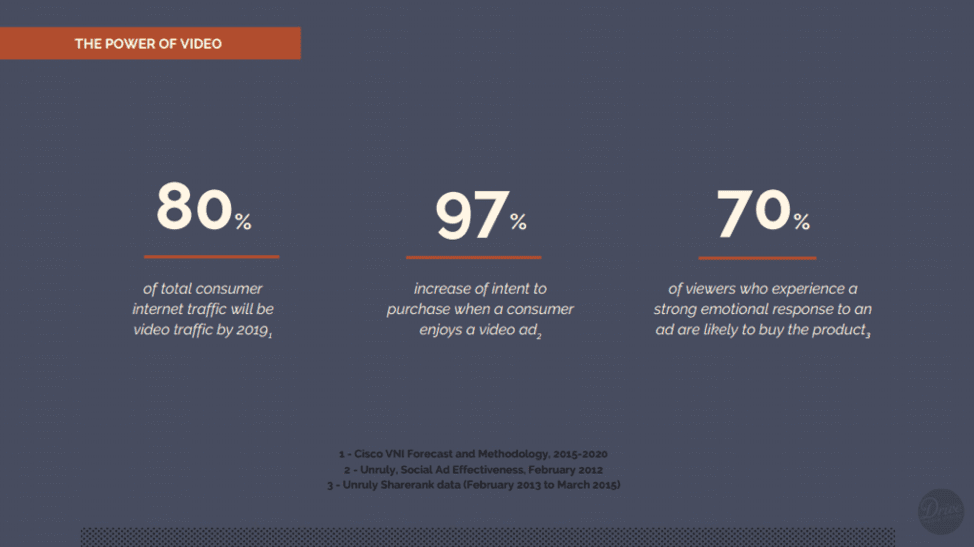
  • Viewers spend 100% more time on pages with videos on them.
  • A consumer who watches a product video is 85% more likely to purchase that product.

Platforms like Twitter, Facebook or Instagram, can once in a while be tough to explain something complex. You can’t expect users to devote 100% of their interest to expertise what you want to say. Therefore, one of the main reasons why visual content is used for social networks is to simplify the information. Make it easily understandable.

Benefits of visual content for social networks

According to HubSpot , Facebook posts that contain images get 53% more likes than those without. But you should know that this does not only apply to this social network. Continuing with the data shared by Quick Sprout, it should be noted that on Twitter the impact is even greater: A tweet with an image achieves 150% more retweets than just text.

Additionally, LinkedIn photo profiles are 7 times more likely to be viewed than those without. So as you can see, everything counts.

Visual content constitutes 93% of all human communication. For this reason, we must create powerful animated content. Besides, the visual makes it easy for us when transmitting emotions. The emotional also sells more.

And it not only serves to increase conversions. But it will also help you to strengthen engagement with your users and persuade them. We recommend people who use social networks to promote or advertise to become more familiar with the subject of animations and their various applications in the medium, as it is something that has helped several companies and people to attract attention. of your market.

Types of visual content

Images– Among the different visual content for social networks, the images are the ones that lead the ranking. They are easy to get, will not cost you much and have high rates of sharing. Besides, if you name them with your keywords they will help you improve your positioning.

Video– It is the king of visual content, but it’s only drawback is that it requires more time, resources and money to produce them. According to Moz, video content is shared three times more than text-only content. They are the perfect way to transmit emotions.

Graphics– They are the best alternative to explain complex information.

Gifs– They are the star format to reinforce engagement. They are easily shared and are very attractive to users.

Memes– They are very popular. They allow you to interact with users and they love to share them themselves. Its main advantage is that they are very easy to create. But they demand to be up to date. Take advantage of recent news or events that have made an impact to create memes from them.

Webinars– We don’t just focus on YouTube webinars. Now the video is reaching new limits and streaming is the future. Take a look at the brands’ live Facebook videos. From the newsrooms of the media to cooking tutorials. You can use it for everything. Of course, it summarizes the content and provides only what is important.

Infographics– Publications containing infographics grow 12% more traffic than those without infographics. The star platform to share them is Pinterest.

Ebooks– It will help reinforce your brand image.

Tips for optimizing content

  1. Call to action inciting participation
Best Animation degree college in Bangalore

To stand out from other messages and push user interaction, adopt strategies that encourage participation. For this, games, mysteries or questions are a good alternative. Since the user, although it may not end up interacting with your brand, will stop to answer your challenge.

And that will generate a bigger brand memory. You will get more conversions if you manage to create curiosity in your followers. Make them think and take a few seconds.

  • Encourage them to be creative
Abstract creative polygonal colorful light bulb background. Innovation and creativity concept. 3D Rendering

What generates the most conversions and reinforces the engagement towards a brand is to make the user participate and share opinions. In this regard, the best tactics you can use are to launch contests or promotions.

One of the brands that use the most contests on social networks is Rimmel London. The steps are usually similar: a hashtag is created and the user is asked to be creative and share their photos with your product. The most original wins.

This will not only make you gain notoriety, but you will also achieve a more credible image towards other users. To achieve it effectively, yes, you need a large community of followers. However, if you have a few followers you can also use this technique to make yourself known.

3.      Squeeze the power of the videos

Each social network has certain characteristics for the use of videos. For example, some social networks allow you to play videos with the audio activated by default. Still, others trigger autoplay. You can convey emotions that will also allow you to go viral.

4.      Play with GIFs

GIFs, animated images, can give you a lot of play if you know how to use them. Visual content for social media does not always have to focus on images and videos. The use of GIFs manages to bring a touch of humor and fun.

5.      Use Humor

Humor and, ultimately, positive messages are the most contagious emotions to use in digital marketing. Take advantage of this feeling and share nice information.

Once that happiness has reached your audience, they will be more receptive to your information. However, you should not force funny or funny situations. First of all, you must be realistic. And this means that what prevails to reach the user is naturalness. Be bold and experiment. Show your personality and share on social networks what defines you and expresses your humor.

Now you will only need to work on these tips. Don’t forget that each social network has its particularities. So you will not be able to publish the same visual content for social networks in all of them.

Each social network is aimed at different audiences. This makes it necessary for you to have an adequate cross-channel marketing strategy that allows you to keep the same message adapted to each communication channel.

If you are reading this then we thank you for sharing your precious time with us. Stay connected and keep reading.

3D -Animation

The definition of 3D animation comes to be a computerized process used by animators to give the feeling of movement through the creation of sequences of 3d still images. You have heard about it, have you? Let’s go back to the beginning. Animation has its origin in the Latin “Anima” and whose meaning is “Soul”. Therefore animating means giving soul to a character or an object so that it seems to come to life, think and act for itself.

However, technically 3d animation is done using programs or applications that simulate three-dimensional visualization. All this through calculations based on the projection of geometry and three-dimensional spaces on two-dimensional screens. These applications allow the creation and manipulation of polygonal meshes that are then converted into the frames that make up any sequence in 3d animation movies.

Remember, if you like this article and want to learn more about 3D Animation, develop yourself professionally or simply stay up to date, on our website you will find an endless collection of articles, news, events related to animation. Animaster College of Animation and Design is among the top animation colleges in Bangalore providing quality education in the field of animation and other design fields.

What is 3d animation for?

3d animation has brought us thousands of uses from the medical field to entertainment. This technique is mainly used to make movies and series, video games, advertising, VFX, virtual and augmented reality, video-mapping, apps, and even scientific simulation. Your goal may well be a new way of telling a story or creating images that would otherwise be impossible. As we have listed the top animation colleges in Bangalore, we have always tried to provide articles that can help applicants to understand what a particular subject is about. In this article, we are going to focus on its application to the world of cinema and entertainment.

Techniques and Types of 3D Animation

There are countless animation styles, as many as 3d artists in the world. Since art is, ultimately, interpretation, each studio and each animator can set a series of rules and choose the most appropriate techniques to define a type of animation.

This decision may have its origin for artistic or budgetary reasons. However, broadly speaking, there are 3 main types of 3d animation; Realistic, Cartoon and Snappy and the most common is to find hybrids that define the personality or style of each studio or in each movie. Here we explain to them all and with examples.

Realistic 3d animation

3-d Animation Design Degree college in Bangalore

Widely used for live-action film sequences that for technical reasons require the integration of 3d characters. Realistic animation can be created by hand (manual) but given the complexity of perfectly emulating the movements of a living being (Human or Animal), the most common way to create realistic 3d animations is to use the current motion capture systems (Motion capture). This technique is also widely used in the creation of Cinematics for Video Games.

3d animation cartoon

Animation design degree course in Bangalore

In the same way that it happens in traditional 2D animation, the 3D animation in Cartoon style comes to be a very attractive simplification of reality. And it is usually defined by a set of rules that give it credibility. The principles of animation are followed in every step. The use to a greater or lesser extent of each of these principles usually marks the style of animation. And in most cases, the seal of the responsible studio.

In this case, the technique is completely manual, that is, the animation is created by animators. You will find a good example in movies like Angry Birds and Ugly Dolls.

Snappy 3d animation

No.1 Animation design degree college in bangalore

The Snappy-style 3D Animation is actually an exaggerated and simplified version of Cartoon Animation. The use of principles as an animation style taken to the extreme, with very marked timings and spacing. And a much more pronounced use of stretching, crushing, and exaggeration. You will find a good example of Snappy animation in the reel of the animator Jorge Vigara, used in large productions. I also include the famous animated short The food thief.

The origin of 3D animation

In 1972 young Edwin Catmull (Ed Catmull) and Fred Parke created the first 3D Animation. 3d Animation came at a time when traditional animators were witnessing the end of a great era. Increasingly, the general public began to value a tool on which no one would think that an empire could be built.

3D Animation Programs

Currently, there is a multitude of 3d animation programs, which take more or less prominence, depending on the standards set by the animation industry. Although they are built to create almost any animation, each software is usually very classified for what type of production (characters, 3dfx situations, motion graphics) or the industry (Cinema, video games, virtual reality, etc.).

Some of the most used programs for the production of 3D Animation (updated to 2020). Autodesk Maya, Autodesk 3D Studio Max, Blender, Cinema 4D, MotionBuilder, Modo, Houdini, and Marvelous Designer.

If you want to know more about the origin of the following article, we will tell you everything about The History of 3D Animation.

Stay Connected and keep reading!

Design Career: 6 of the Highest Paid Jobs

The essence of the profession

The designer is constructing. It creates for the customer a new world – comfortable and pleasing to the eye. He/she knows what is well constructed and what is bad. His main task is to transform into a client and look at the world through his eyes to create what a person will like. Everyone expects from the designer beauty, style, lightness, sophistication, understanding only a picture pleasing to the eye. But this is a very narrow view because the designer is also thinking about functionality. Take for example in product designing it is no longer just an aesthetic object, but a tool. If it is beautiful but inconvenient, it means that the designer could not cope with his work. A box for storing goods should not only be beautiful and attracting attention, but also convenient for workers in the warehouse, sellers in the store and, of course, for the end-user. It should be light, signs on it – easy to read. Animaster being in the top 10 design colleges in Bangalore, has always tried to give a clear idea about career in designing.

Will the packaging be convenient? How much space does it take in a container when transporting from another part of the world? Is it possible to save by reducing its size? Will it get wet in the rain? What is it like to put the goods into it, get it, clean it again? How expensive, environmentally friendly and technological should the material be and how much will it be needed? Is it attractive? Will it be an innovative polymer or cardboard without an image and inscriptions? Is it difficult to make packaging from such material? How much time and money will it take? These and other questions the designer must ask. The tasks of specialists can be completely different, but the designers have one thing in common: an integrated approach to work. The designer answers a million questions, makes a lot of decisions, provides for everything. Thinking only about beauty, he/she will not make a good project.

In an interconnected world where technology manages all major industries, designers are the most sought-after professionals in various fields. Being in the top 10 design colleges in Bangalore has helped us improve the quality of education for students which can give them a good future in their field of design education. There was never a better time for designers to demonstrate their skills and follow their hobbies through creative exits to earn big money, while at the same time making a positive contribution to the development of society. Although design creation is often used in a wider context, there are several unconventional career options for those seeking to use their design and creative skills to achieve their goals.

Here are the top 5 highest paid careers that are best for designers:

Video Game Designer

Video game designer likely appears like a dream job to any online game enthusiast, and if you can make it in the business, it comes with a pretty rewarding professional career path. As a videogame designer, you will be responsible for the introduction and implementation of innovative designs along with engineers, programmers, and artists. Having a degree in graphics, programming, art, or another related field will assist you to become a videogame designer. A bachelor’s degree or diploma in graphics, art, or an associated subject is typical. Video game design is a highly aggressive and competitive field, so you will want to be at the peak of your game, if you need to succeed. One will require to have intense knowledge about the field as expectations are generally very high from consumers and clients. Understanding analytical, maths, object-oriented programming is a must.

According to PayScale, the average salary for a videogame designer is $60,013 per year, with a reported salary range of $36,201 to $99,576.

Multimedia Art or Animation /3D-Designer

These fields include studying movement, interesting facial expressions, unique ideas and always tries to figure out how to replicate them, explain them. A 3D Designer is likely to design or create the design of objects in the form of a three-dimensional representation using the software. These are used in many industries: healthcare, web design, research, automotive, games, space exploration and much more. A 3D designer must have technical knowledge in the field of writing code or software, as well as have an artistic talent for creative thinking and the ability to use the most advanced tools to recreate his ideas in real design. 3D Designers are in great demand in industries such as web design, robotics, and healthcare, where their talents and contributions can have a greater impact on social welfare.

According to PayScale, the average salary for an animator is $50,680, with an average salary range of $31,937 to $82,072 per year.

Interior designer

If your talents are designing spaces for optimal utility without compromising aesthetics, interior design can be a great career choice to leverage your creativity. The main responsibility of an interior designer is to create beautifully designed interiors that are safe, functional and useful for its inhabitants. Interior design is a complex subject requiring extensive knowledge of building codes, rules, careful planning and thoughtful implementation of ideas. Nevertheless, interior design is also one of the most profitable career decisions on the market, especially due to population growth and the ever-growing demand for improved living and working spaces.

According to PayScale, the average salary for an interior designer is $49,178, with an average salary range of $27,970 to $70,032 per year.

UX Designer

We all love how functional and appealing our web, mobile, and desktop are, but people outside of the industry may not understand or realize how much effort is put for implementing it. User Experience Design (UX design) is a process that involves conceptualizing a product, integrating it with the design process, evaluating user experience and the actual branding that is associated with it. UX designers have a wide range of responsibilities because they are ultimately responsible for the success or failure of a product or service in the market. If you follow the name, it is expected that the UX designer will have a clear plan to create a better user experience. He must understand the concept from the user and have a unique understanding of what, how and why the product meets the demand of an individual user. A career in UX design is suitable for people who love technology and how products are displayed to customers because it’s more like a career that includes extensive research in human psychology as well.

According to PayScale, the average salary for a user experience designer is $72,886 per year, with a reported salary range of $48,593 to $103,650.

UI Designer

A user interface designer (UI Design) makes sure that the user experience on desktop, mobile, or the web is seamless and functional. Unlike a user experience designer, a user interface designer needs experience in programming and software development for desktop, mobile, and the web. The main responsibilities of a user interface designer are to develop and create a usable and attractive user interface. You will also be responsible for testing out the design for usability as well as researching trends to ensure you create a finished product that both the end-user and your client will want to use.

According to PayScale, the average salary for a user interface designer is $68,362 per year, with a reported salary range of $42,678 to $100,821 per year.

Digital Product Designer

Everything is online these days: from your daily groceries to luxury items, digital products have a huge impact on our expenses. Therefore, digital product designers play a huge role in the replication of real products in the digital sphere, which requires a high level of creativity, programming knowledge and talent to understand the atmosphere of online users. Digital product design may also include 3D design, but product designers are more concerned about how they can reach a larger audience through their online presence. Thus, a career in this direction will require a person to have a deeper understanding of the market, his thorough research, product knowledge and the general tastes of customers.

According to PayScale, the average salary for a product designer is $76,081 per year, with a reported salary range of $43,988 to $122,267.

The path to a lucrative career as a designer

Many areas can greatly help beginners who want to succeed in the design industry. Although most design-oriented professions require a university degree or, at least, a specialisation course, some design jobs require only software knowledge or programming skills with little creative potential.

The growing demand for designers is undoubtedly a good indicator that indicates a profitable career choice, but you also need to be aware of the latest market trends and technological advances. To succeed in any field, you must stay abreast of the latest developments in the market, especially in such a high-tech industry as design, where software, technology, experience, and other components are changing rapidly.

‘As an artist, you know part of the joy is not only the process but also the result of seeing people interact with your work.’

Thank you for reading.

Advantages and Disadvantages of Graphic Design

Advantages and Disadvantages of Graphic Design

Magazine covers, newspaper pages, packaging and advertisements on buses are just some of the projects graphic designers work on. They consider visual elements as subtle as white space and typography, and as attractive as interactive web pages. People with artistic talent and computer skills often make successful graphic design careers. Animaster is listed in the top graphic design college in Bangalore and has always come up with articles that can give insights on the career a student wants to opt for. There are pros and cons for all careers and an aspiring designer must consider the advantages and disadvantages of design.

Advantages

It allows you to explore your creative side.

top graphic design college in Bangalore

People with a lot of creativity and ideas can find graphic design rewarding. Great graphic designers see visual possibilities, and in many cases, they deliver concepts that guide the future of products, publications, and websites. Frequently, graphic designers solve problems by combining concepts, finding new twists on the traditional brand and looking for ways to accommodate the needs of multiple clients such as marketing, laws, and product development departments. People who like to use imagination to solve practical problems enjoy graphic design.

The labor field is wide

diploma in graphic design

Maybe you know several people who have completed a degree in graphic design, do not worry, the labor field is quite wide, there is always a business that is starting and needs advertising, a magazine that wants to change its designs, all large or small businesses always go to request the work of a graphic designer. Whether it is a degree in graphic design or diploma in graphic design, the main objective is learning and exploring the field. You can also dedicate yourself to different areas, design web pages, book covers, invitations to events, everything is a matter of taste, as well as you can dedicate yourself to children’s designs or for the general public.

It gives you the freedom to express your learning

When you are a graphic designer it is not necessary to work as an employee earning a fixed salary and dedicated only to the product of the same company, you can work independently looking for your own clients, the money input will be much greater and you gain experience in a variety of products, You only need to make the investment in the computer and have the programs of your choice. You can attend to your customers at the time you want. It allows you to organize yourself better.

You can work online

Nowadays, internet jobs have become quite common, and the graphic design profession is in high demand in this modality, you can be a freelance graphic designer from the comfort of your home, organizing your work time as you wish, and you can also do this type of work to receive extra income if you have already enrolled for a full time job. Later if you feel more comfortable working as a freelancer with good income, you can dedicate your full time into freelancing, you have to be self-organised and sorted since the whole work will relate only with you.

It enables you to gain financially

For the work of graphic designer, a computer with the programs of preference is indispensable, this is the first investment you must make for your business, what you are going to charge is for your creativity, when you deliver your final product it is not necessary to use money from your wallet since the person who hires you is going to bear the costs of printing, in the case that you work as a freelance you must make the investment in the internet fee but keep in mind that it generates good profits.

It prepares you for new challenges

The ideas, tools, and projects of the clients will never be the same, each client will have a different story that they will want you to portray. Every request by the client becomes a new challenge for the graphic designer, it is new work experience, this makes your imagination become wider and manages to express Better emotions, and be much more perfectionist in jobs.

Explore new opportunity

graphic design career

Because graphic design has many applications in various industries, designers can find many career options and opportunities. Graphic designers may discover that if they get bored with a type of design, they can move on to others to reignite the spark. For example, a newspaper designer may eventually go on to design advertisements, which later in his career can lead to the design of advertising posters and product packaging. The skills acquired in an establishment can be applied to others, giving diverse and interesting graphic design career paths.

Disadvantages

Limitations

Some graphic designers are disappointed by the gap between their expectations and reality. They enter graphic design expecting a lot of creative freedom and space to adopt new approaches. In reality, graphic designers usually serve clients (internal and external) who have needs, expectations, and demands. Graphic designers must often work with the needs and limitations of their clients and develop results that please a variety of people.

Instability

career in graphic design

Many graphic designers work on their own or work on a contractual basis. In addition, many internal graphic designers who have a stable job for major agencies and companies discover that during times of economic crisis or financial instability, companies reduce their marketing budgets and the launch of new products. This affects the creative sector and often results in layoffs and job losses. Graphic design is a field with ups and downs. People who love work should plan based on fluctuations in business cycles and economic changes.

Just like any career, being in graphic design also brings its ups and downs. You can work with the best of people and on a rare occasion, the not so best of people. But at the end of the day if you are passionate about a career in graphic design, you will succeed.

So here we conclude our blog, if you are reading this then we thank you for giving us your time. Stay connected and keep reading.

Create your own website, free on WordPress.com.Create your own website.
Start free